DRINKING WATER UPDATE
UPDATE 07/17/2020
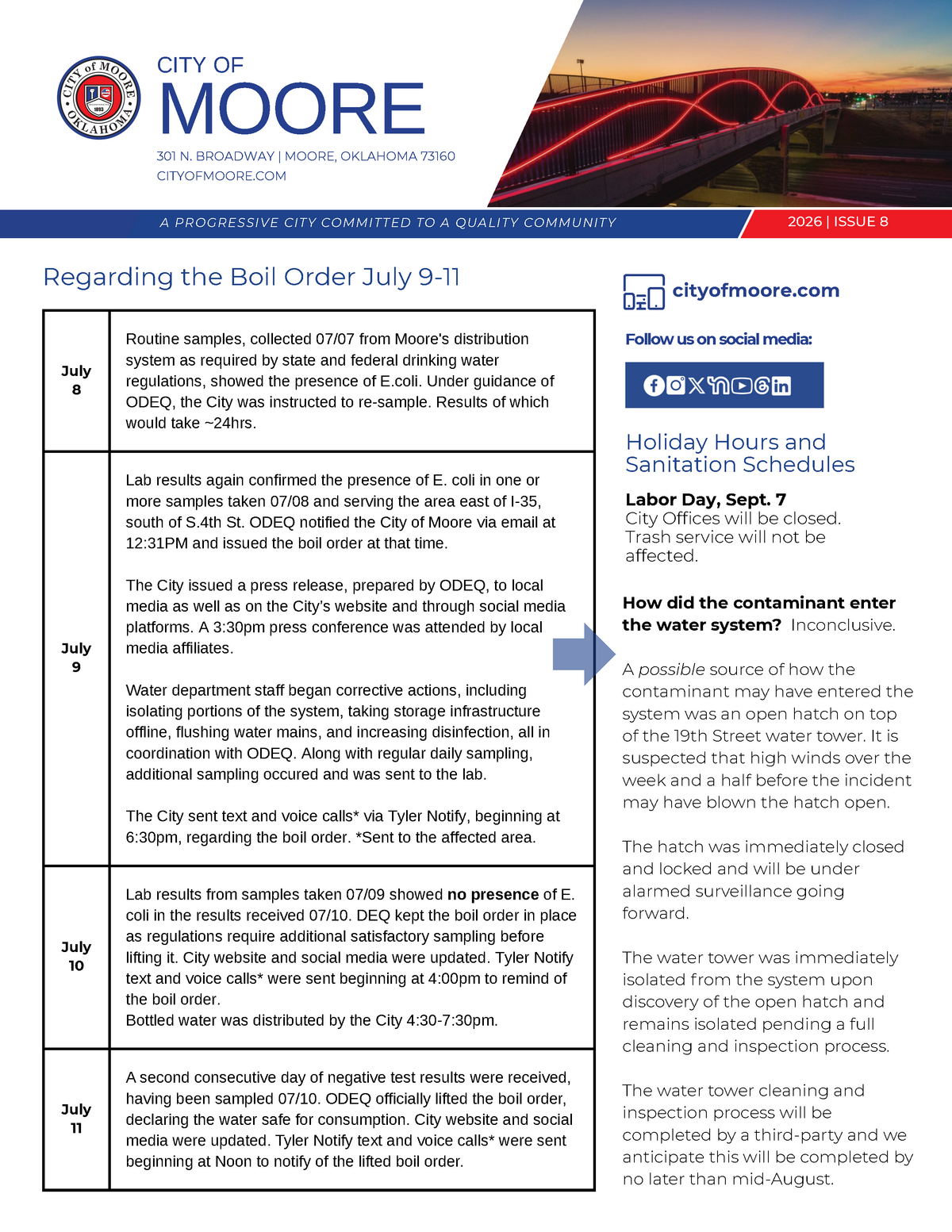
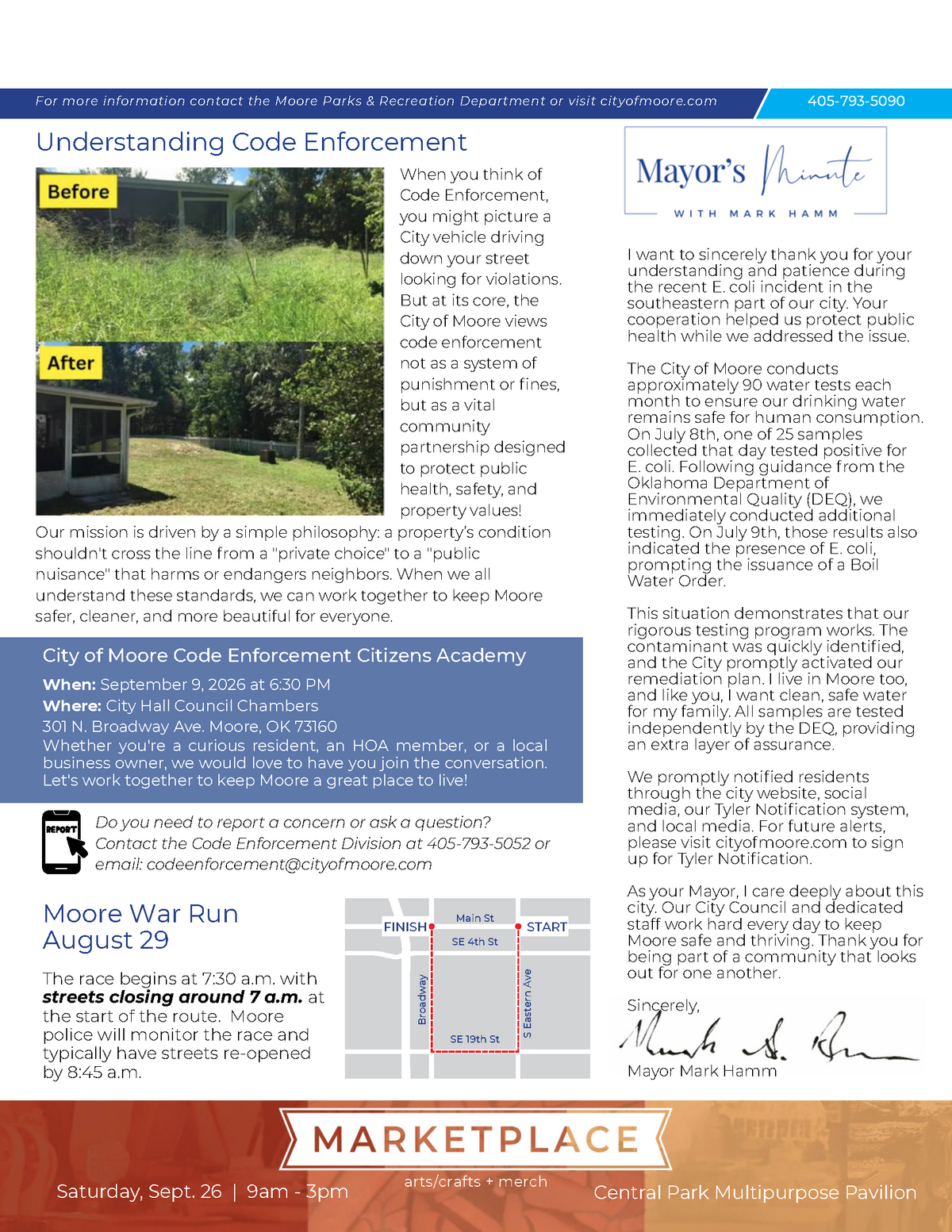
More information about the early July boil order can be found in the upcoming citywide newsletter. A digital image is provided below.
UPDATE 07/11/2026- ODEQ has lifted the boil order for ALL portions of the City of Moore.
On Saturday, July 11, follow-up testing of the City of Moore’s water system indicated sample results clear of the presence of E.coli bacteria for a second consecutive day. Saturday’s test results indicate the combined response by the city and its wastewater operations and maintenance operator, Veolia, to the bacterial issue have been successful. The City and its partners will continue to coordinate our response with the Oklahoma Department of Environmental Quality. We will continue to work with our partners to ensure the system remains fully compliant with state standards. Thank you, residents, for your patience and assistance during this matter. Please see the below information from ODEQ for suggestions as to how to proceed.
UPDATE 07/10/2026
DEQ regulators informed the City of Moore today that follow-up testing on the city’s water system has produced results clear of the presence of E.coli bacteria. A boil order remains in effect for at least an additional 24 hours as follow-up testing continues to confirm the absence of contaminants. These public health actions are critical steps toward returning Moore’s water system to normal operations as quickly as possible.
After routine testing of Moore’s water distribution system confirmed the presence of bacteria in samples on Thursday, July 9, the City of Moore and its water operations and maintenance contractor, Veolia, took immediate action to isolate the situation and take corrective action, including taking some water storage infrastructure offline, flushing water lines and adjusting disinfection treatment. All corrective action was taken in coordination and consultation with the Oklahoma Department of Environmental Quality.
The City, and its partners, are continuing to investigate any possible causes of the issue and to carry out all necessary maintenance to ensure the system remains fully compliant with all state standards. The City of Moore will continue to provide updates to the public and appreciates our resident’s patience and cooperation.
WATER GIVEAWAY-As of 8pm, all water has been given away. Friday, July 10, beginning at 4:30PM, residents in the affected area may pick up free bottled water at the Moore Schools Administration Building, 1500 SE 4th Moore, 73160. The amount of water per household given will be determined based on available supply.
The City of Moore is thankful to the Oklahoma Salvation Army for the donation of the water.
07/09/2026: BOIL YOUR WATER BEFORE USING or USE BOTTLED WATER
E. coli bacteria were verified in the Moore Public Water Supply on July 9, 2026. These bacteria can make you sick, and they are a particular concern for people with weakened immune systems.
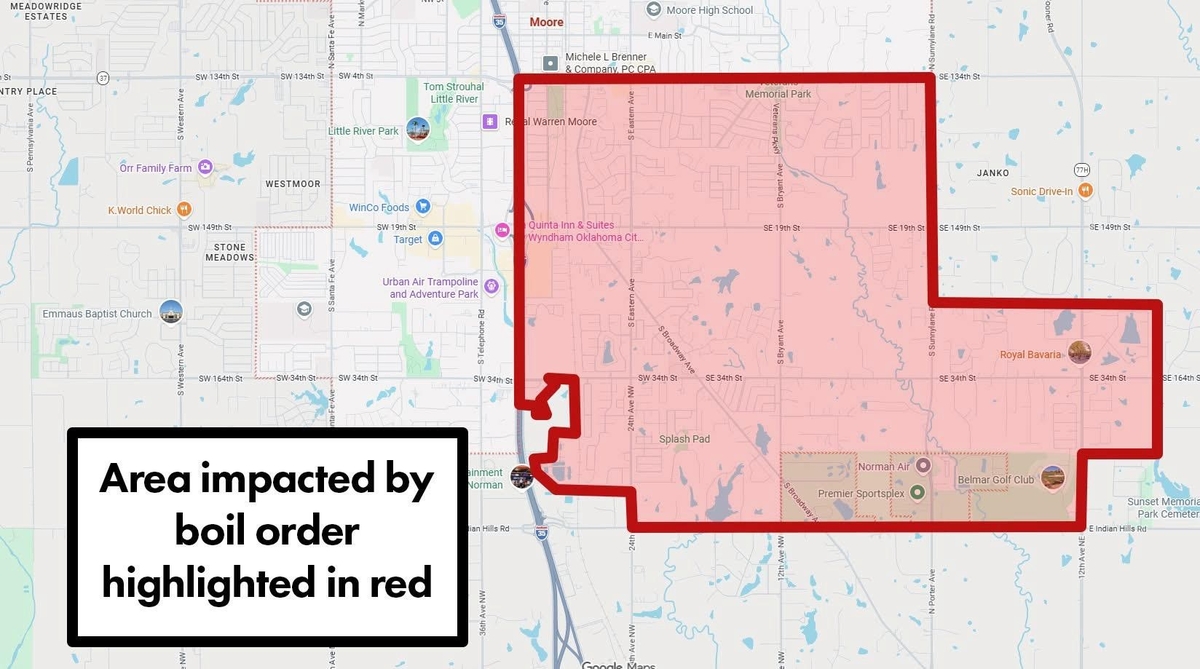
This order only applies to customers of Moore Public Water System in the area east of Interstate 35, south of SE 4th St., north of Indian Hills Rd. and west of the Moore city limits. Please see the map below showing the affected service areas.
What should I do?
- DO NOT DRINK THE WATER WITHOUT BOILING IT FIRST. Bring water to a full, rolling boil for one minute before drinking, preparing food, making baby formula, making ice, brushing teeth, washing dishes, bathing infants who may drink bath water, or for cleaning open wounds. Boiling the water kills bacteria and other disease-causing agents. Alternatively, use bottled water or another acceptable source for consumption.
- Fecal coliforms and E. coli are bacteria whose presence indicates that the water may be contaminated with human or animal wastes. Microbes in these wastes can cause short-term effects, such as diarrhea, cramps, nausea, headaches, or other symptoms. They may pose a special health risk for infants, young children, some of the elderly, and people with severely compromised immune systems.
- The symptoms above are not caused only by organisms in drinking water. If you experience any of these symptoms and they persist, you may want to seek medical advice. People at increased risk should seek advice about drinking water from their health care providers.
What happened? What is being done?
Bacterial contamination can occur when increased run-off enters the drinking water source (for example, following heavy rains). It can also happen due to a break in the distribution system (pipes) or a failure in the water treatment process.
Describe corrective actions: We are working with DEQ to handle this as soon as possible.
We will inform you when this problem has been corrected. We anticipate resolving the problem as soon as possible based on DEQ’s advice.